
Initiation Well Spiral Staircase, Quinta da Regaleira
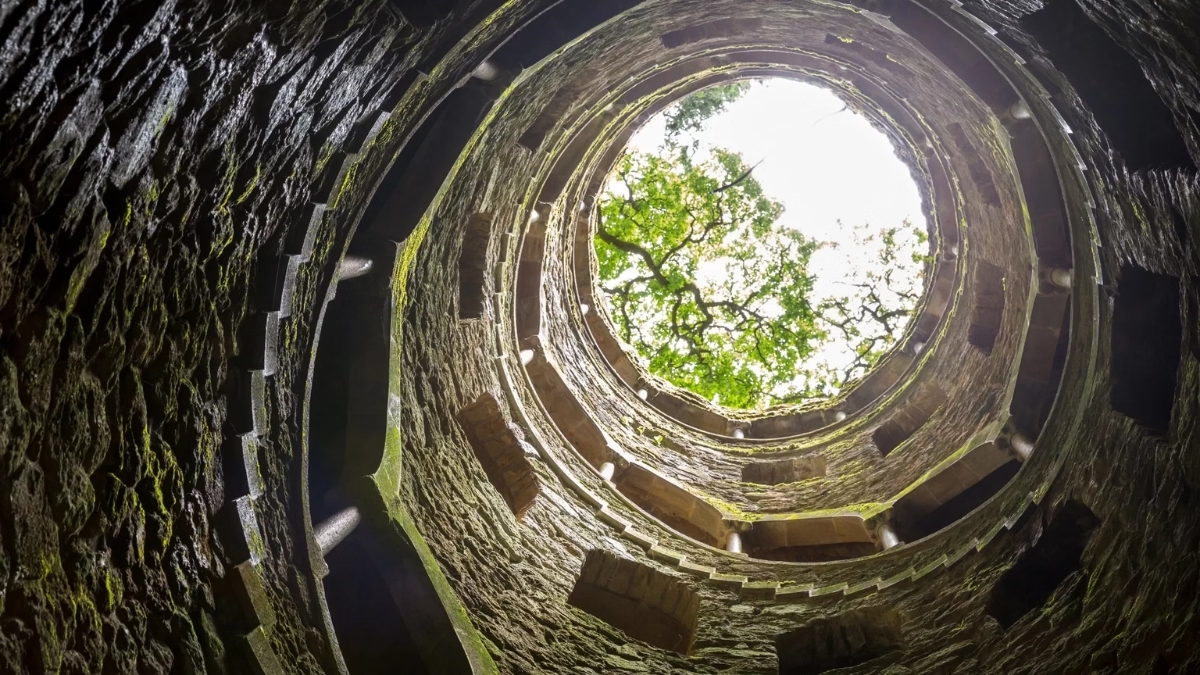
The Initiation Well’s spiral staircase at Quinta da Regaleira winds down about nine landings and roughly 27 meters into the hillside. You walk it in one direction — down only — spiraling around an open central shaft toward a tunnel and daylight at the base. The steps are narrow and can be wet, so wear non-slip shoes and take your time; the queue is shortest right at the 10:00 AM opening.
The spiral staircase inside the Initiation Well is the part of Quinta da Regaleira people remember with their feet as much as their eyes. It is one thing to look down the shaft from the top; it is another to actually descend it, circling the void level by level as the light changes and the sounds of the gardens fade above you.
This guide focuses on the descent itself — what the nine landings feel like, what you see on the way down, the light waiting at the bottom, where to stand for photos, and the practical stuff: queues, timing and footing. For what the well is and what its symbolism means, read our companion guide to the Initiation Well.
The Spiral Staircase at a Glance
| Detail | Initiation Well Spiral Staircase |
|---|---|
| Landings | about nine |
| Vertical drop | around 27 meters |
| Direction | down only |
| Enter | at the top, at ground level |
| Exit | through a tunnel at the base |
| Surface | stone, narrow, often damp |
| Time to descend | a few minutes at a steady pace |
Descending the Nine Landings
You enter the spiral staircase at the top and walk down about nine landings around an open central shaft, never climbing back up. Each landing is a short flight and a quarter-turn or so of the spiral, so you circle the void repeatedly as you drop the roughly 27 meters to the base. Moving at a steady pace, the descent takes only a few minutes, but crowds and photo stops can slow it.
The staircase hugs the outer wall of the shaft, wrapping around an open central well so that you are always looking across or down into empty air. Each of the roughly nine landings breaks the descent into manageable flights, and the repeated turning is what makes the well so disorienting — you quickly lose track of how far you have come and how far is left.
Because everyone moves in the same direction, the pace is set by the group in front of you. On a quiet morning you can pause on a landing, take it in, and let the spiral do its work. At busy times you shuffle down in a slow line, which is safe but leaves little room to stop. Either way, keep to one side, let faster visitors pass on the inner edge where they can, and don’t lean out over the low walls to get a shot.
What You See on the Way Down
The view changes constantly as you descend. Near the top, you are still connected to the garden — greenery over the rim, daylight flooding in, the carved stone of the entrance. A few landings down, the walls close in, the light dims to a cool gray, and the moss and damp on the stone become the dominant texture. The central shaft, always open beside you, frames a shifting slice of the world above.
Looking up is as rewarding as looking down. From halfway, the opening at the top reads as a bright ring, with the spiral of the staircase rising toward it — the classic upward shot. Looking down, the steps corkscrew into shadow toward the pale glow of the exit tunnel. The symbolism of the well is built around this contrast of dark and light, and you feel it physically as you go.
The Light at the Bottom
At the base of the spiral staircase, the darkness gives way to a soft glow from the exit tunnel rather than a return of full daylight. You step off the last landing onto the floor of the well — where the Templar cross is set into the stone — and then walk out horizontally through the tunnel, which eventually delivers you back into the gardens. The transition from dark shaft to lit tunnel is the payoff of the descent.
Reaching the bottom is a distinct moment. After several landings in cool shadow, the base opens up, the Templar cross marks the floor beneath you, and a low tunnel leads off to one side with light spilling from its far end. You do not climb back into the sun the way you came; you walk on through the underground tunnels, which surface elsewhere in the gardens — one route emerging at the stepping stones of the Cascade Lake.
That handoff from staircase to tunnel is what makes the descent feel like a journey rather than a detour. The dark shaft builds the tension; the lit passage releases it.
Photography Tips
The best-known shot is taken from the very top, camera pointed straight down the central shaft to capture the full spiral — but that spot is crowded and everyone wants it, so be quick and courteous. For something different, shoot upward from a mid-level landing to catch the bright ring of the opening with the stairs curling toward it, or frame a fellow visitor on the spiral for scale.
A few practical notes. Light is low in the shaft, so a phone will slow its shutter and blur easily; brace your elbows or rest the phone on the wall, and keep both hands free by putting bags on your back. A wide lens exaggerates the spiral nicely. Avoid using flash, which flattens the stone and disturbs other visitors, and never step over the low walls for a photo — the drop is real. If you want the spiral without a stream of people in frame, the only reliable answer is to be there at opening.
Queues, Timing and Footing
The spiral staircase is the estate’s busiest bottleneck because it only takes people one way and everyone wants to walk it. The queue at the top entrance builds through the morning, so arrive at the 10:00 AM opening and go straight there. Underfoot, the stone steps are narrow, uneven and often damp, with no handrail in places — wear non-slip shoes and descend carefully.
Timing is everything here. Since the staircase admits visitors in one direction only, a line forms at the top and lengthens as day-trip groups arrive from Lisbon later in the morning. The most effective plan is to reach the estate right at opening and make the well your first stop; our guide to the best time to visit explains the quietest windows, and a skip-the-line ticket locks in an early timed slot.
Footing deserves respect. The steps are stone, narrow and worn, and moisture from the surrounding rock and Sintra’s damp microclimate leaves them slippery, especially after rain. Handrails are limited, so keep a hand near the wall, don’t rush, and be patient behind slower visitors. It is not a step-free route and there is no lift, so anyone with limited mobility, a fear of heights or a buggy will find it difficult.
Frequently Asked Questions
How many steps or levels is the Initiation Well staircase?
The staircase spirals down about nine landings over roughly 27 meters, the equivalent of a nine-story descent. Each landing links a short flight of stone steps, and the exact step count is rarely quoted because the landings are the natural way to measure it. At a steady pace the descent takes only a few minutes, though queues and photo stops often stretch it out.
Can you walk up the spiral staircase?
No. The staircase is one-directional — you descend only and exit through a tunnel at the base rather than climbing back up. This preserves the well’s symbolic one-way journey and keeps the narrow steps from jamming with two-way traffic. Because everyone flows the same direction, a queue builds at the top entrance, which is why arriving early makes such a difference.
Is the Initiation Well staircase safe?
It is safe if you take it carefully. The steps are narrow, uneven and often damp, and handrails are limited, so slips are the main risk. Wear non-slip shoes, keep a hand near the wall, don’t rush, and never lean over or step across the low walls around the central shaft. Descend at the pace of the people in front of you rather than trying to pass.
Are the steps slippery?
They can be. The surrounding rock keeps the stone cool and damp, and Sintra’s humid microclimate means the steps are frequently moist even in dry weather, and genuinely slippery after rain. Sturdy shoes with grip make a real difference. Take the descent slowly, especially on the lower landings where light is lowest and the stone is dampest.
How long does it take to walk down?
Only a few minutes if the way is clear — the vertical drop is about 27 meters over nine landings. In practice, timing depends far more on crowds than on the walk itself. At peak times you move in a slow, single-file line and may wait several minutes just to enter at the top. Early morning is when you can descend freely and pause to take it in.
What is the best time to avoid the queue?
Arrive at the 10:00 AM opening and head straight to the well. It is the estate’s busiest bottleneck because it only admits people one way, and the queue lengthens through the morning as tour groups arrive from Lisbon. A skip-the-line ticket secures an early timed slot so you can be among the first down.
Where do you come out at the bottom?
You do not come out the way you went in. At the base you step onto the floor of the well, past the Templar cross set into the stone, and walk out through a tunnel. That tunnel is part of the estate’s underground network and eventually surfaces elsewhere in the gardens, most memorably at the stepping stones across the Cascade Lake. The staircase and tunnels form one continuous route.
Can you take photos on the staircase?
Yes, and it is one of the most photographed spots in Sintra. The famous shot looks straight down the shaft from the top; an upward shot from a mid-level landing captures the bright ring of the opening. Light is low, so steady your phone and skip the flash. Be quick and considerate at the top, where space is tight, and never step over the walls for a photo.
Is the staircase wheelchair or buggy accessible?
No. The spiral staircase has narrow, uneven stone steps, limited handrails and no lift, so it is not accessible for wheelchairs or buggies, and it is difficult for anyone with limited mobility or a strong fear of heights. Much of the wider estate is also steep and uneven. Our visitor rules and tips explain the accessible and step-free options around the grounds.
